Behind the Headlines
Britain's overlooked housing crisis
Names have been changed for all individuals to ensure they are not exposed to discrimination, hostility, or professional repercussions as a result of having being interviewed for this story.
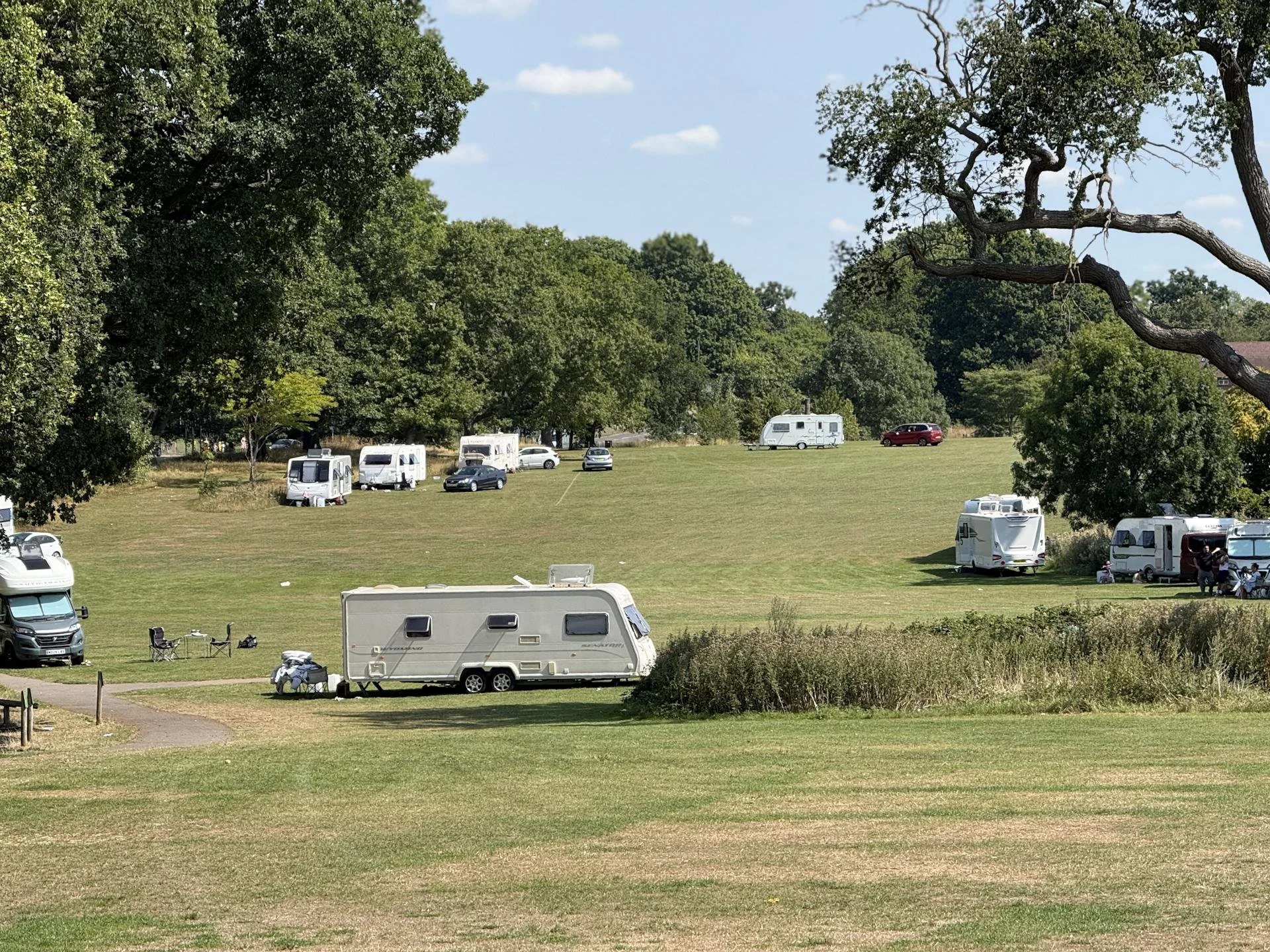
Failing by Design
Councils bury plans, government looks away, and open prejudice goes unchallenged. For Gypsy, Roma and Traveller families, Britain’s housing system is not failing by accident, it is failing by design.
Discrimination
Through the eyes of the travelling community and those who support them, this story reveals a hidden housing crisis which is uniquely challenging and often ignored.
Helen, an Irish Traveller, has spent twelve years on the housing list and the past six in what was supposed to be short-term emergency accommodation. A mother of five, and one of the few Traveller women working part-time, she is raising her children in a cramped flat with no garden, no green space, nowhere for them to play. For her family, temporary has become permanent. Katherine, also an Irish Traveller, was forced into a housing estate, away from her family. She was told “Well if you don’t take that you are off the housing list”, she feels cornered by the council.
In Britain today, an insidious form of prejudice persists, silently shaping landscapes and lives. Brian, senior executive of a housing association, sheds a stark light on this reality, stating, "This is a community of people or an ethnic group who are the last set of people who it seems okay to be openly discriminatory about". This sentiment is echoed by Sarah, a development management planner, who unequivocally states, "this is the last remaining respectable prejudice". She even finds herself needing to "remind them and educate them that actually that's not okay to say" among her own colleagues, highlighting how deeply ingrained this bias is, even within professional circles.
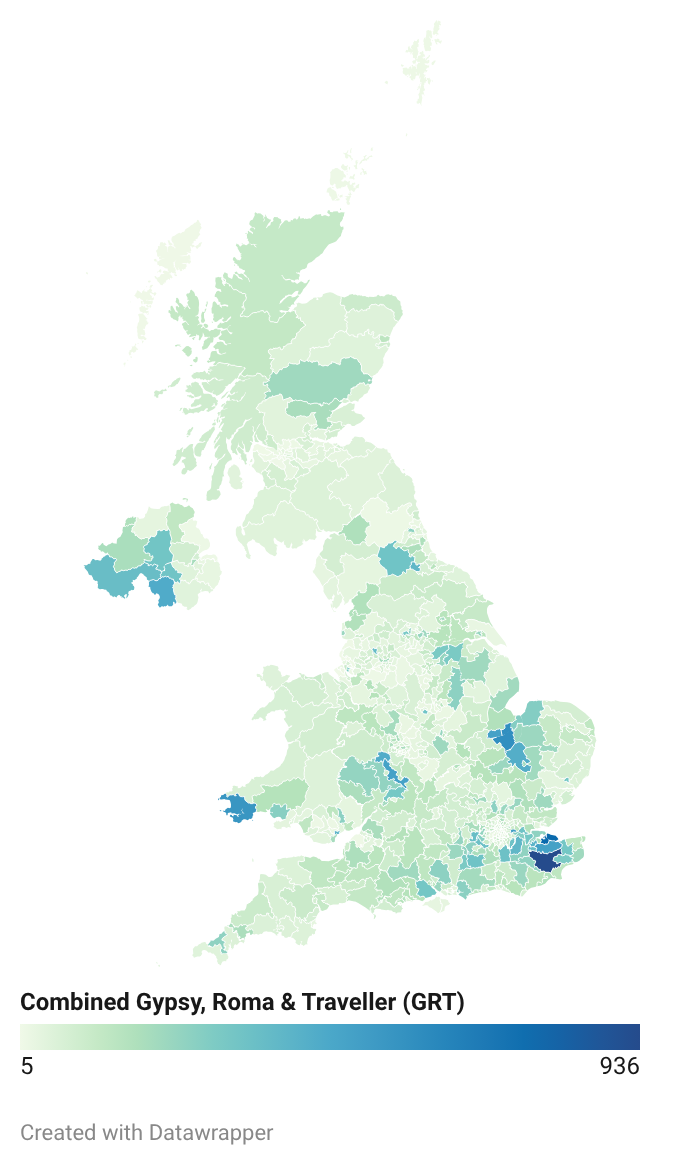

It is a chilling truth, "the level of discrimination that these people face in their daily lives is probably like no other in Britain". This entrenched discrimination against the Gypsy, Roma, and Traveller (GRT) community is not merely an unfortunate societal backdrop; it is the central, often insurmountable, obstacle in their struggle for adequate living environments. Alice, a community development worker, describes being "floored particularly by the lack of communication" and the intense "negativity towards the travelling community," observing that "the level of prejudice and discrimination I’m finding in general is very much pervading the behaviour and actions of the council towards the travelling community".
This deep-seated bias permeates every facet of housing provision, creating a crisis rooted in the "failure to understand and articulate problems with housing this community faces and why". As Brian powerfully articulates, "We need something to change politically, and in terms of public perception and the media". For those striving to build and manage culturally appropriate sites, this societal resistance translates into tangible, debilitating challenges: "From a delivery point of view, that doesn't make anything easier. It makes everything harder".
Brian elaborates on the two fundamental elements of GRT housing: "One is delivering it, which is getting sites, getting funding, getting planning, building it, and then there's management". He emphasises that the difficulty of delivery and management is exacerbated by the prevailing prejudice. This pervasive discrimination leads to local authorities either ignoring the need altogether, choosing to "stick it into the long grass, not deal with it, just kind of ignore it", or even proposing sites in utterly unsuitable locations, such as "effectively underneath the motorway flyover" or "next to the municipal recycling plume".
As Helen poignantly states, "no one should be on a housing list, on a homeless list, and no one should be homeless. We should have a roof over our head, we should have a permanent home", "no one should be living in conditions like that".
Health Inequalities
The GRT community experiences significant health inequalities compared to the general population in Britain. These inequalities are attributed to structural discrimination and racism, housing and site insecurity, poverty, education gaps, criminalisation and over-policing, service inaccessibility, and stigma around mental illness and help-seeking.
10,000 GRT people have no place to stop due to a chronic national shortage of sites
·
3,000 GRT families with no permitted stopping place have limited or no access to basic water and sanitation
·
GRT life expectancy is 10-25 years shorter than the general population
·
GRT health in their 60's is comparable to White British in their 80's
·
43% GRT are reported to suffer from poor mental health
·
GRT women are twice as likely to experience poor mental health than general population of women
·
Suicide prevalence is 6 times higher for GRT women than women in the general population, and 7 times higher for GRT men
·
11% of GRT deaths are due to suicide
·
10,000 GRT people have no place to stop due to a chronic national shortage of sites · 3,000 GRT families with no permitted stopping place have limited or no access to basic water and sanitation · GRT life expectancy is 10-25 years shorter than the general population · GRT health in their 60's is comparable to White British in their 80's · 43% GRT are reported to suffer from poor mental health · GRT women are twice as likely to experience poor mental health than general population of women · Suicide prevalence is 6 times higher for GRT women than women in the general population, and 7 times higher for GRT men · 11% of GRT deaths are due to suicide ·
Systemic Resistance
The struggle for appropriate housing for GRT communities is fundamentally hampered by a pervasive and deeply entrenched systemic resistance. As Brian starkly puts it, "All of that is set against the overarching narrative that gypsies are a problem". This damaging perception infects every level of society, making the already complex task of housing provision exponentially more difficult.
Local populations often harbour deep-seated prejudices, making it challenging to establish new sites. Brian notes, "Communities either don't understand or don't like having gypsies near them. That's just the truth". This local sentiment directly impacts political will, as local authority members will resist having a gypsy site on their ward because some of "their constituents don't like it". Sarah, recalls dealing with a village that was "absolutely up in arms" over a planning application, with "horrific" things being said. She described it as "one of the most unpleasant villages in terms of this terrible prejudice that comes with these applications". This resistance can even sway political decisions, as members of a planning committee overturned an approval at the time of parish council elections, citing "landscape harm".
The narrative perpetuated by media often reinforces negative stereotypes, contributing to public animosity and fear. Media coverage often reinforces stereotypes, sidelining GRT voices. It not only distorts public perception but also legitimises political and policy decisions that further marginalise them.
Brian describes government approaches as "a bit schizophrenic in terms of how it has told the story about this community. Sometimes it has been supportive. It put money into the MHCLG (Ministry of Housing, Communities and Local Government) fund and there have been various parliamentarians and politicians on all sides who've been supportive".
However, he notes that "delivering high quality, culturally appropriate gypsy and traveller housing in the kind of locations where it is going to work is challenging on many levels". This leads to efforts that are "sporadic, disjointed, inconsistent".
Sarah highlights significant issues with the official assessment of need, explaining that the Lisa Smith judgment changed the definition of "gypsy and traveller" to focus on ethnicity, rather than active travel, rendering many older Gypsy and Traveller Accommodation Assessments (GTAAs) "out of date" and likely underestimating the true need. She also points out that surveys can be unreliable because the community "don't really take kindly to people just turning up and asking them a load of questions".
The cumulative effect of this systemic prejudice is that "As long as it's semi-OK to basically be unpleasant and racist about this community, it's always going to be hard to deal with". For housing providers, this translates directly into significant operational hurdles, making things harder. This increased difficulty has tangible and severe consequences: "If things are hard, that means they take longer. So planning takes longer. It costs more".
Brian explains that GRT housing is "not particularly cheap to deliver". One of the reasons for this is that providers are "unlikely to get a pristine green belt site with great transport and other amenities," instead often acquiring "a brownfield site which is a mess and needs a lot of money spending on it and major landscaping work".
Local authorities, lacking "hard targets" or "consequences" in planning rules, frequently shirk their responsibilities. This lack of genuine "political will," "provider will," and "government will" means that the number of active participants in this space remains "way below what it needs to be to create a long-term step change".
The economic impact is also severe. Housing institutions, operating like any business, "evaluates how hard it is to do, how much it's going to cost". The inherent resistance and lack of support mean that GRT housing is "more expensive, more challenging, takes more time, and more effort to get it done". This necessitates making "grant rates even more attractive because it's expensive and tricky to do" to incentivise the delivery of these vital, culturally appropriate homes.
The story of GRT housing, therefore, is not merely about bricks and mortar, but about battling deep-seated societal antagonism that transforms every step of the process into an uphill climb.
Lack of Political Will
The crisis in GRT living environments is fundamentally a profound failure of political and official will. Brian unequivocally highlights that " this is generally a problem which is quite hard to embrace and therefore requires a particular will to do so". This lack of understanding creates a vacuum where proactive solutions should exist, leaving the GRT community perpetually underserved. It also creates "sporadic, disjointed, inconsistent" efforts, rather than a cohesive national strategy.
Despite some progress in raising awareness and securing funding, Brian notes that "the number of people and local authorities active in this space is below what it needs to be to create a long-term step change". This is exacerbated by "the lack of imperative or statutory responsibility on local authorities to deliver this kind of housing" and planning rules that offer "not enough hard requirements" or "consequences" for local authorities who neglect their responsibilities.
Consequently, many local authorities demonstrate a troubling pattern of inaction, deliberate deferral and outright resistance often fuelled by local politics. This bowing to local prejudice, rather than upholding the housing rights of a marginalised community, perfectly illustrates how discrimination translates into a systemic lack of official will.
For Helen, this inertia has had devastating personal consequences. She recounts receiving "fake and false promises", such as the offer of a "beautiful" home around Christmas, which vanished without a trace after sparking excitement among her children. Her assertion that "in the council, they have their favourites. Well, they choose who to give a home to" directly challenges the fairness and impartiality of the system, suggesting deliberate rather than just passive inaction for some families. The lack of official will is further underscored by Helen's harrowing experience: after being assaulted in her own home, the police "even rang Housing to put in good words, to try to get me out of there and get me a secure home," but the council ultimately did "nothing".
Brian insists that this inertia is not insurmountable, stating, "where there is a political will and an office of will, this does get fixed". However, for true change, this “will” must be "hardwired into the planning framework" through "formal requirement on local authorities".
Until then, the housing challenges faced by the GRT community will remain a stark testament to a society that often chooses to look away, perpetuating a crisis that is both deeply human and profoundly political.
Dehumanising Solutions
The pervasive discrimination against the GRT community manifests not just in apathy or resistance, but in actively dehumanising proposals for their living environments. Brian recounts examples where local authorities, rather than providing dignified homes, attempt to relegate GRT sites to locations utterly unfit for human habitation. "The council wanted us to deliver a site effectively underneath the motorway flyover," Brian reveals. Such proposals are not only impractical but deeply insulting, positioning the GRT community as deserving of the most undesirable and forgotten corners of society.
Helen's current living situation illustrates these "dehumanising solutions" in practice. She describes her accommodation as "not liveable for any right human being". This overcrowding is exacerbated by the lack of amenities, and her accommodation also suffers from significant maintenance issues. Katherine, also an Irish Traveller adds, "no one should be living in the condition like that. Where windows don’t close, and dampness, and rooms being so crowded", “depression then comes, not having a stable home”. Furthermore, Helen and Katherine note that there's "no green space for the kids", leading Alice, a traveller community development officer, to remark that there's "absolutely nothing social about those conditions," which can result in children engaging in "risk-taking behaviour" because of the conditions they live in.
Brian’s housing association, however, refuses to participate in this indignity. Brian emphatically states, "It's not an appropriate place for housing for anybody and it's certainly not something we're going to do". The organisation actively challenges these demeaning suggestions, pushing back against the idea of "sticking next to the municipal recycling plume or the motorway". This determined resistance underscores a fundamental principle: culturally appropriate housing must also be geographically and environmentally appropriate and provide a decent standard of living.
The struggle to deliver suitable housing is intrinsically linked to challenging these dehumanising solutions. Brian’s approach involves "pushing back where local authorities try to put too many plots, or plots in the wrong places". For Brian, it is about ensuring "you deliver something which works on a day-to-day basis for the people who live there", demanding locations that are safe, accessible, and respectful, rather than merely convenient dumping grounds for a marginalised community.
The battle over location is a powerful illustration of how systemic discrimination translates into tangible, demeaning realities for the GRT community, and why organisations like housing providers are vital in advocating for basic human dignity.
Bridging the Divide
Even for individuals approaching the GRT community with sincere personal dedication and a genuine desire to help, the engagement experience and initiating dialogue about their challenges has proven exceptionally difficult. This profound struggle to connect and garner trust is attributed directly to the community's historical and ongoing experiences with discrimination, leading to a deep-seated apprehension toward outsiders. As Brian acknowledges "that trust just isn't there".
This deep-seated mistrust stems from generations of being marginalised, misunderstood, and openly discriminated against. Brian notes, "Let's not sugarcoat it. There are challenges with some sites and with some gypsy traveller families and individuals, like there are with any ethnic or community group". In such an environment, every interaction, even with well-meaning outsiders, is filtered through a lens of suspicion, making genuine engagement a painstaking endeavour.
Yet, organisations like Brian’s have found a way to bridge this divide, demonstrating that trust, though fragile, can be built. Their success lies in an approach that is anything but transactional. It demands "boots on the ground", with dedicated housing officers who "need to know the people on the site". They act as crucial "conduits between that community and the rest of civic infrastructure", mediating with institutions like the police, benefits, local authorities, schools, and fire services, entities that are "not necessarily trusted institutions with some members of this community".
Sarah exemplifies this dedication, stating her personal ethos: "can I find a way to support it" and "where there is a way, I'll try to find it". She admits to getting "emotionally involved with these cases". However, Sarah also highlights a significant practical challenge for advocates like her: the "significantly poor" approach of GRT community representatives. She describes some as "extremely aggressive" and others who submit "terrible" information, often trying to "game" the system rather than working with it. Sarah expresses a wish that "if more representatives worked with the system, that would help the community out so much more". This lack of effective representation further complicates the advocate's struggle, as good information and constructive engagement are crucial for successful outcomes in the complex planning system.
Building trust requires a unique blend of dedication and cultural understanding. Housing officers "have got to be up for it. They've got to want to do it. They've got to understand that community. They've got to spend time with that community and those individuals". This specialised role, with officers often managing just "four sites" compared to the hundreds in general housing, highlights the intensive, relationship-focused work required to navigate family issues, manage allocations, and address the specific challenges that "play out differently than they do in other social housing patches". Brian further details these distinct challenges, noting, "There are issues with dogs, with fires, with vehicles, with horses, with police, with cybersecurity, and there are neighbour disputes".
It is through this sustained presence, consistent effort, and a genuine commitment to understanding, rather than judging, that the foundations of trust are slowly, painstakingly laid.
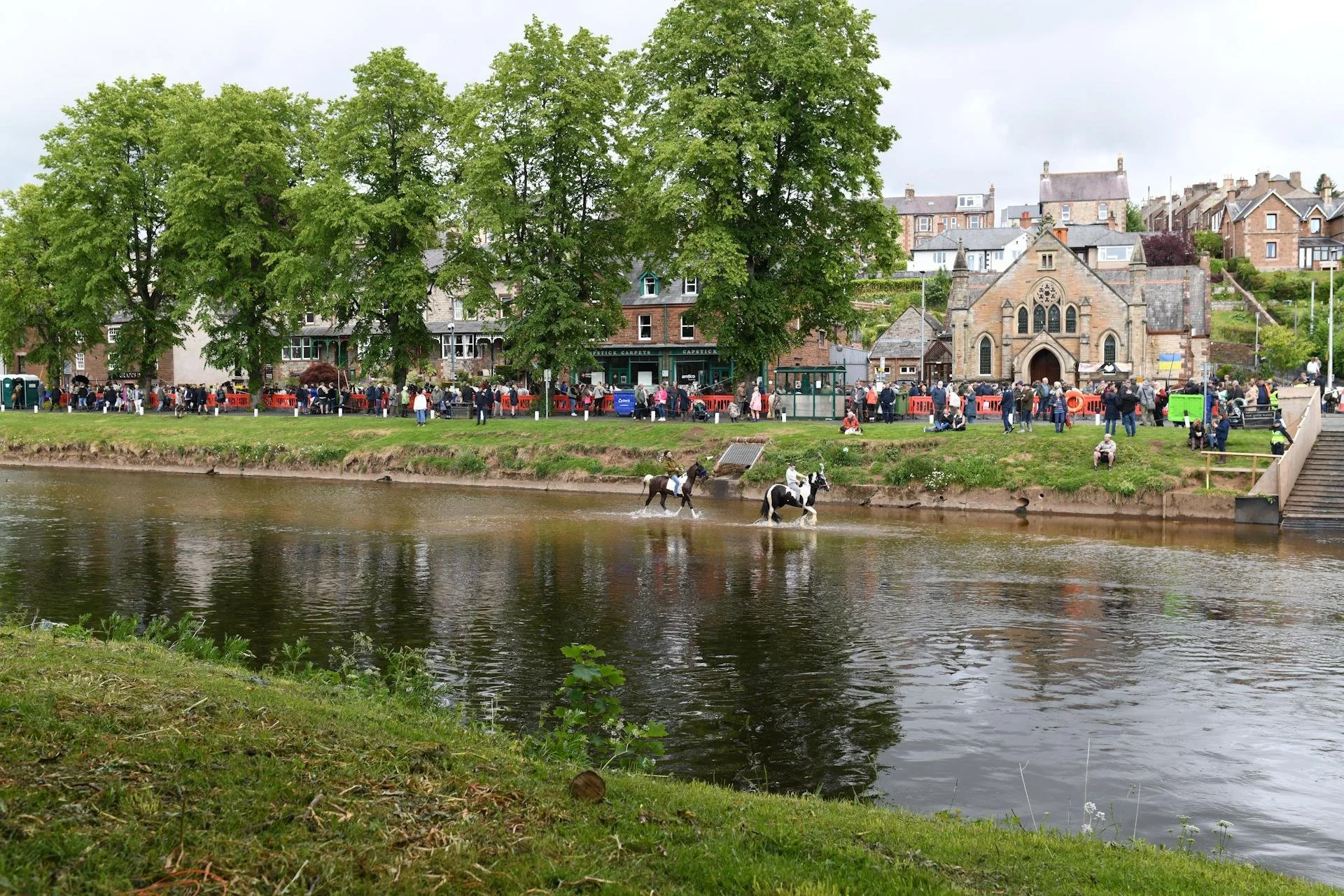
Washing horses in the river Eden, a GRT tradition that dates back to at least 1685.
A Right Denied
For Helen and Katherine, injustice isn’t abstract, it’s part of their daily lives. They have been forced into unstable, unsuitable living conditions that separate them from their families and community. For Helen, the consequences show in her children’s growing involvement in anti-social behaviour, a direct result of their environment. For Katherine, the toll is on her and her family’s mental health, as they are pushed into houses where they do not want to be.
In 2025, no family should still be denied the basic right to a culturally appropriate home, yet government inaction and open prejudice continue to make that denial a reality for many GRT families.