Justice Denied
How the justice system is failing domestic abuse survivors
Content Warning: This article contains images, descriptions, and accounts of domestic abuse and trauma that some readers may find distressing. Reader discretion is advised. Names marked with an asterisk (*) have been changed to protect the indemnity of survivors.
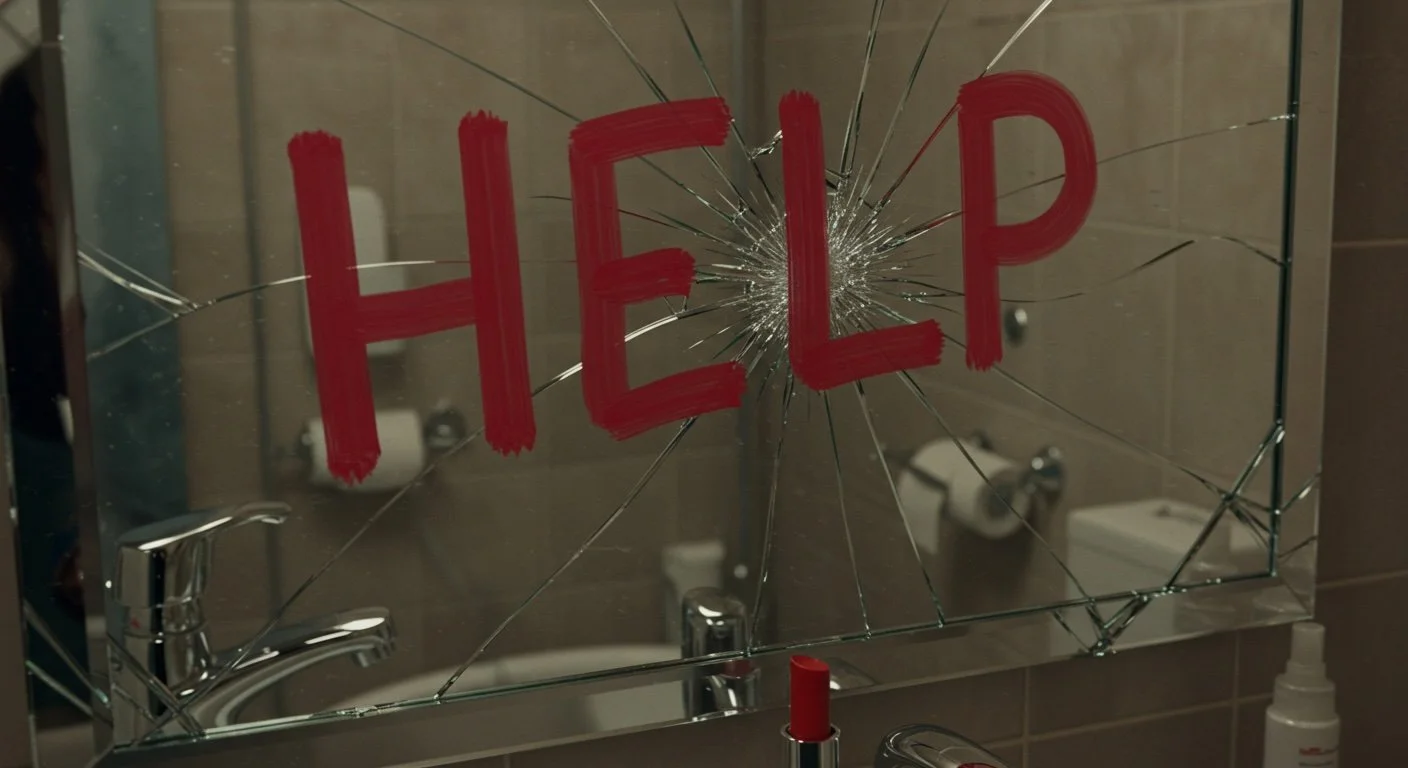
Survivors of domestic abuse in England and Wales face a justice system overwhelmed by delays, systemic disbelief, and financial barriers.
Introducing Mary
Through the eyes of a survivor and those who support them, this story reveals a hidden crisis—where psychological wounds cut deepest yet remain invisible.
Mary* believed her life was ordinary, she was a respected professional, a mother, and seemingly happily married. Yet beneath this facade lay years of calculated psychological torment, financial manipulation, and isolation—abuse invisible to all but her.
Mary's ordeal is shockingly common. The Crime Survey for England & Wales (CSEW) estimated that 2.3 million (4.8%) adults aged 16 years and over experienced domestic abuse in the year ending March 2024.
Less than 37% of cases were recorded by police, with less than 9% of those recorded being referred to the Crown Prosecution Services (CPS)
However, many cases like Mary’s, characterised by coercive control rather than physical violence, remain unseen, misunderstood, or overlooked by authorities and by society more widely.
"There is so much stigma about speaking up on domestic abuse," Mary shares. "It's awful out there, but I am happy to share because enough people just don’t speak up."
Unmasking Invisible Abuse
Mary’s abuser controlled every aspect of her life, from her finances to her friendships, methodically isolating her from her support network. "It would be easier if he punched me," she says disturbingly, emphasising how psychological abuse's scars run deeper, are harder to identify, and to prove.
Mary’s breaking point came when her young daughter witnessed yet another instance of emotional cruelty. "I didn’t want her thinking this was normal."
Mary’s struggle to break free highlights glaring deficiencies in the UK's justice system. After finally gathering the strength to leave, Mary found little support from the police, who initially dismissed her claims, influenced by her husband's societal standing. "The police were useless, completely coerced by him," she says, recounting how her husband manipulated authorities, using tactics known as DARVO — Deny, Attack, Reverse Victim and Offender — to portray Mary falsely as mentally unstable. Tragically, this practice is not unique; countless survivors recount similar experiences.
Understanding Coercive Control
Domestic abuse isn't always physical. Coercive control is an act or a pattern of acts of assault, threats, humiliation and intimidation or other abuse that is used to harm, punish, or frighten their victim. Coercive and controlling behaviour is at the heart of domestic abuse, with offences increasing year on year as highlighted in the graph below.
Protection & Prevention
Mary’s lifeline came in the form of a non-molestation order, a crucial but temporary shield, giving her the metal and physical space she needed to regain clarity. "Without the non-molestation order, he would have weaselled his way back in. It saved me," Mary explains.
Elizabeth*, an Advocate from a South East England based outreach centre, reinforces Mary's experiences, highlighting the profound human toll of systemic failures. Elizabeth's role is to humanise the often impersonal interactions survivors have with law enforcement. "My role is to bridge the gap between the police and the survivor and add more of the human side, to bring more empathy and remain neutral," Elizabeth explains.
However, she acknowledges that the justice system itself often compounds survivors' trauma. Elizabeth describes a backlog so severe that court dates are currently being set for as late as 2028. "Survivors are waiting years with ongoing trauma," Elizabeth reveals, underscoring a painful reality: "The worst possible outcome occurs, with survivors either taking their own lives or being killed by their abuser."
Understanding Non-Molestation Orders
In the UK, a non-molestation order is a court order, a type of injunction, designed to protect individuals and children from abuse, harassment, or threats from a partner, or other "associated person". Non-molestation orders have risen by 58% between March 2012 (19,507) to March 2024 (33,626). The graph below shows a peak for most regions during COVID period, which has since started to tail off.
Economic Barriers to Safety
Financial barriers present another obstacle. Mary, despite clear evidence of domestic abuse, struggled to access the legal aid she desperately needed due to her ex-husband's significant earnings. "If you don't pay into the legal system, you can't get out of it," she states, describing how she was forced to self-represent against her husband's high-powered legal team, a situation that further disadvantaged and caused her further trauma.
Mary’s experience aligns with nationwide trends. Women's Aid reports that only a fraction of domestic abuse cases receive adequate financial and legal support, leaving many survivors trapped by economic dependency on their abusers or isolated by the justice system's bureaucratic hurdles.
Despite increased awareness, exacerbated by societal crises such as COVID and the current cost-of-living crisis, Elizabeth notes, "Our referrals team are expanding to deal with the increase we are seeing. Nevertheless, resources remain critically insufficient. We don’t just need more courtrooms; we need more judges, legal staff—we need more of everything."
The Woman's Aid short film shows the shocking reality faced by many in their every day lives.
Closing the Just Gap, Urgent Reforms Needed
Addressing these failures requires a multi-faceted approach — stronger legal frameworks, improved enforcement, better victim support, and a shift in societal attitudes. Without immediate action, the justice system will continue to fail those who need it most.
As Mary courageously puts it, echoing the powerful call-to-action voiced by domestic abuse survivors and advocates alike: "The abuse needs to change sides."
“Government’s efforts to tackle violence have not yet improved outcomes for the victims of these crimes. The lack of effective, cross-government approach and a limited understanding of what works to help reduce these crimes, means the Home Office cannot be confident that government is doing the best it can to keep victims safe”
“Confidence in the justice system is at an all-time low, and every day survivors continue to be failed”
“Crown Court backlogs are at record levels, and is having serious consequences for survivors who are waiting for justice. We urgently need significant reform of the justice system to improve outcomes for survivors, along with improved funding for specialist domestic abuse services to ensure survivors facing court delays are supported.”
"I will use my voice for good".
— Mary (Survivor)